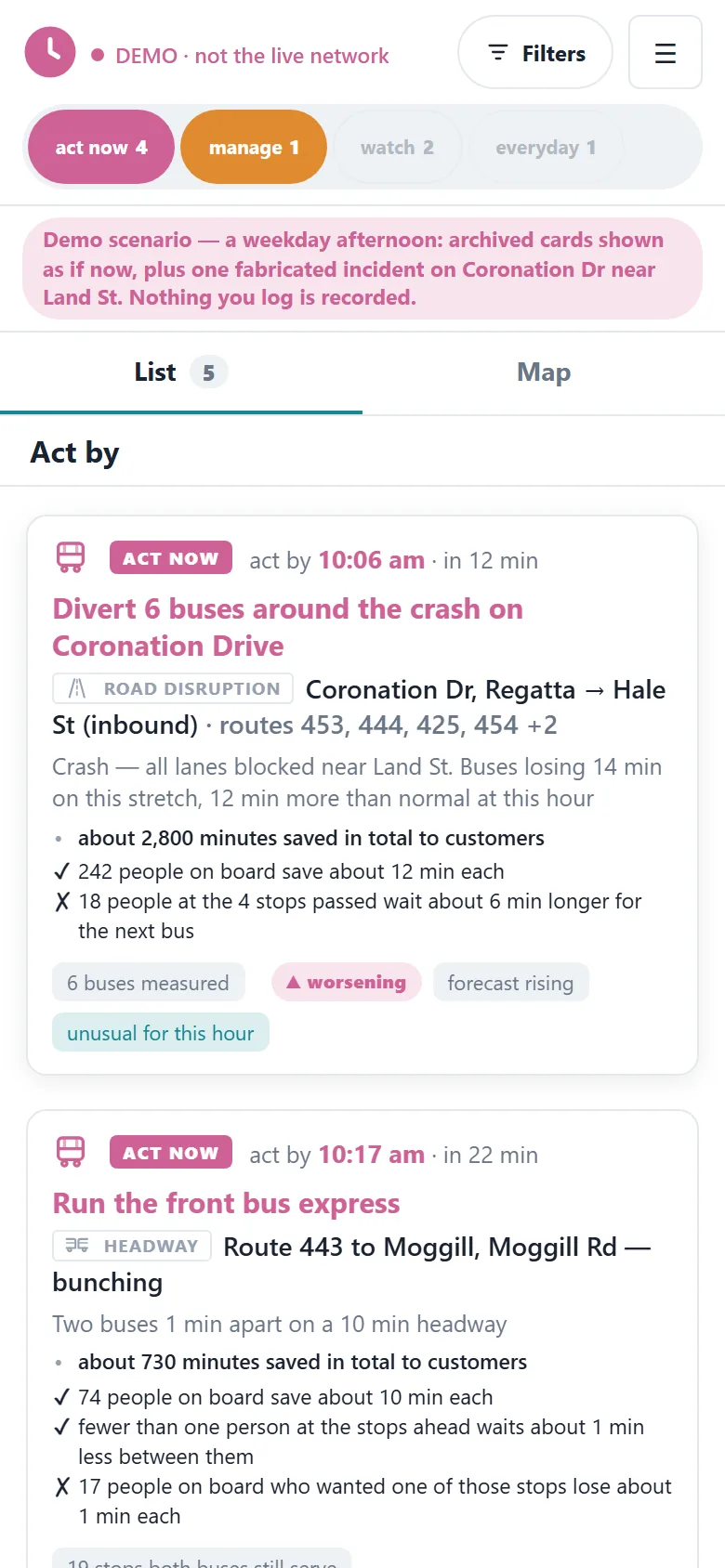
Real-time network recovery
What to do next, and by when.
When service starts to break down, Headway gives the control room the recovery move and the time left to make it.
One card per decision
The move, the deadline, and who gains.
Every option is counted in passenger-minutes. Leaving it is always on the card.
Act nowact by 4:45 pm · in 4 min
Hold the 4:28 pm T4 to Cleveland 2 min at Bowen Hills
Cleveland line · bunched 1 min behind the train in front, with a 4 min gap behind it
+763passenger-minutes better than leaving it
Includes the riders on the trains behind it and the people waiting for them further down the line.
Hold 2 minLeave it
A Brisbane train recommendation, 20 November 2026, redrawn.
The console
Sorted by time left to act.
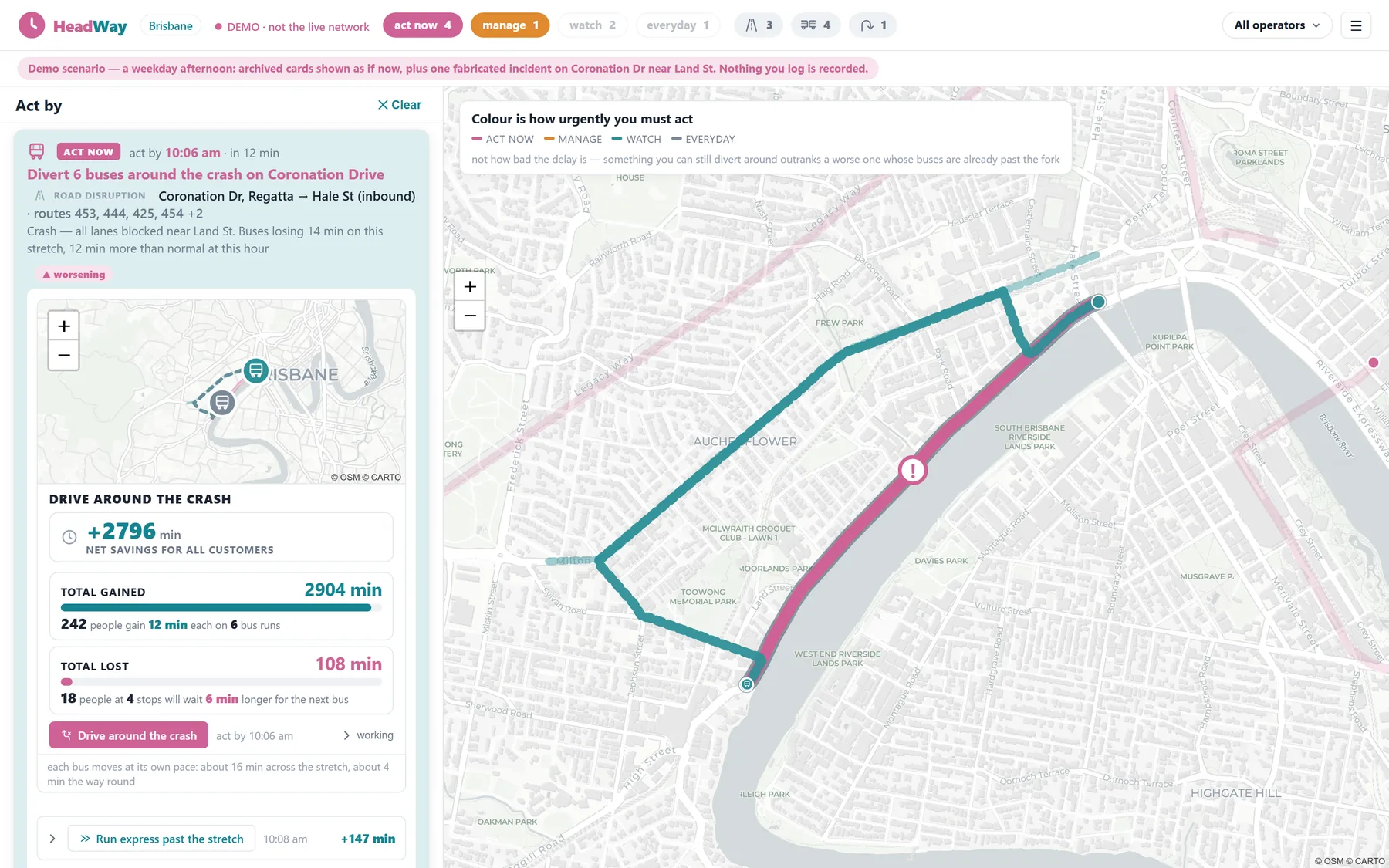
Most tools say what will happen. Headway says what to do about it.
The moves
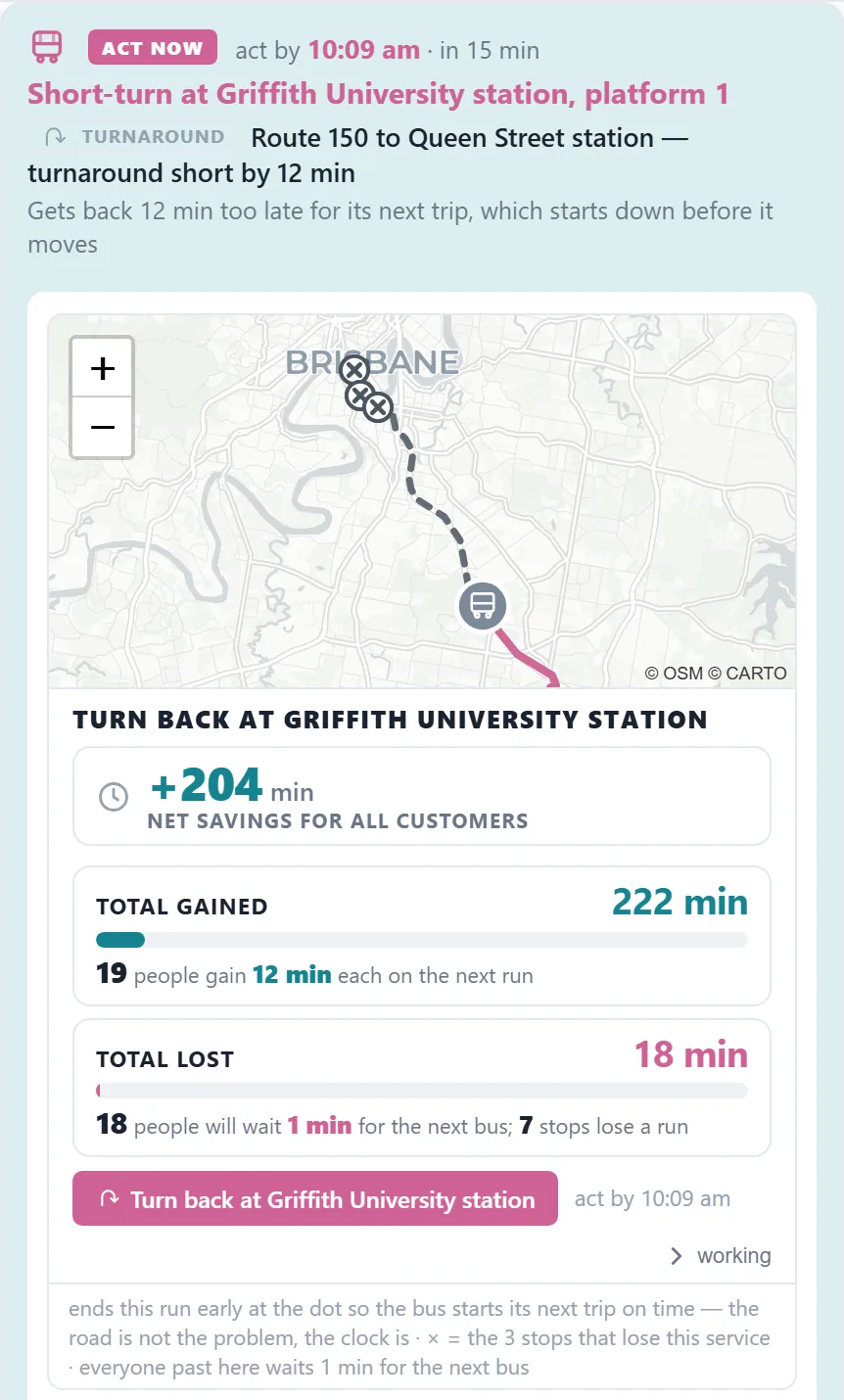
Hold, run express, turn short, divert.
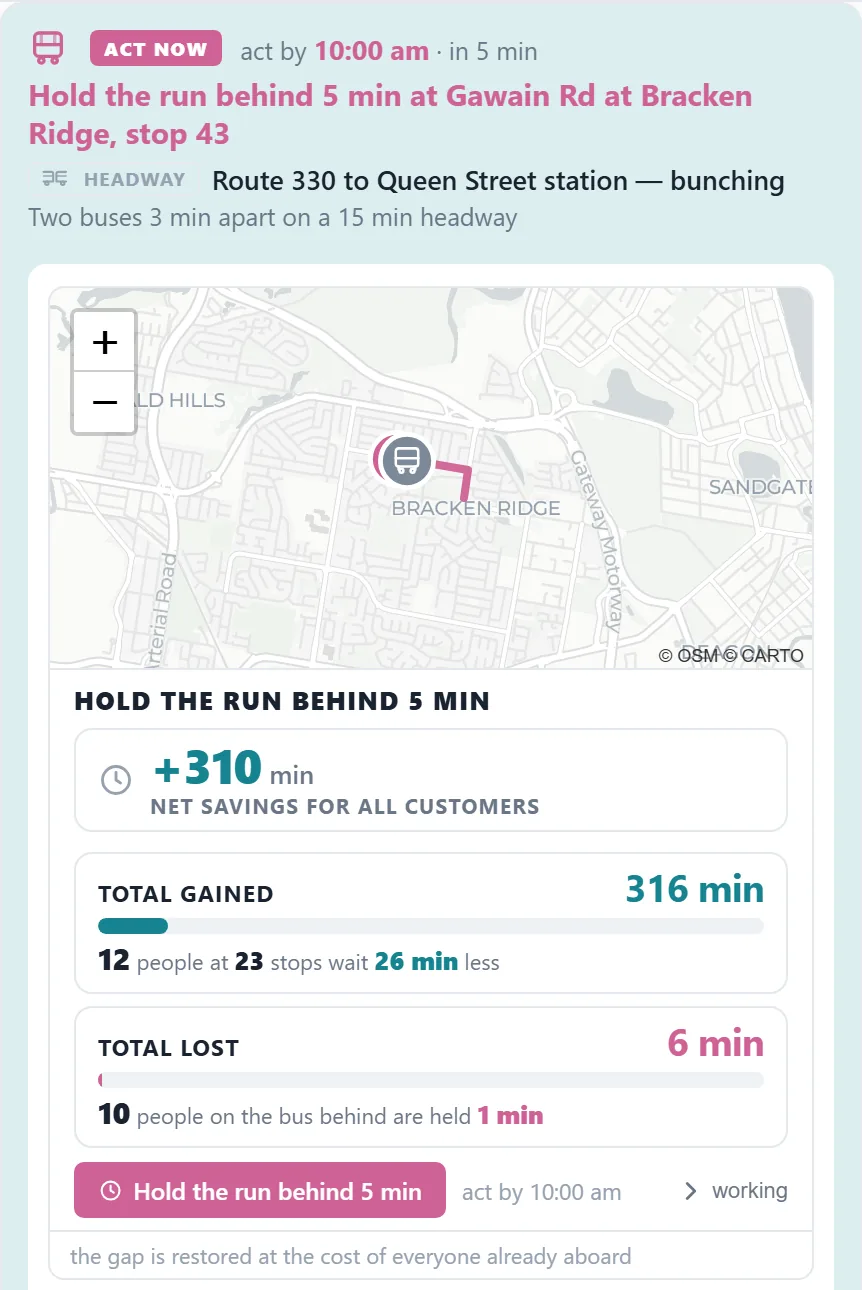
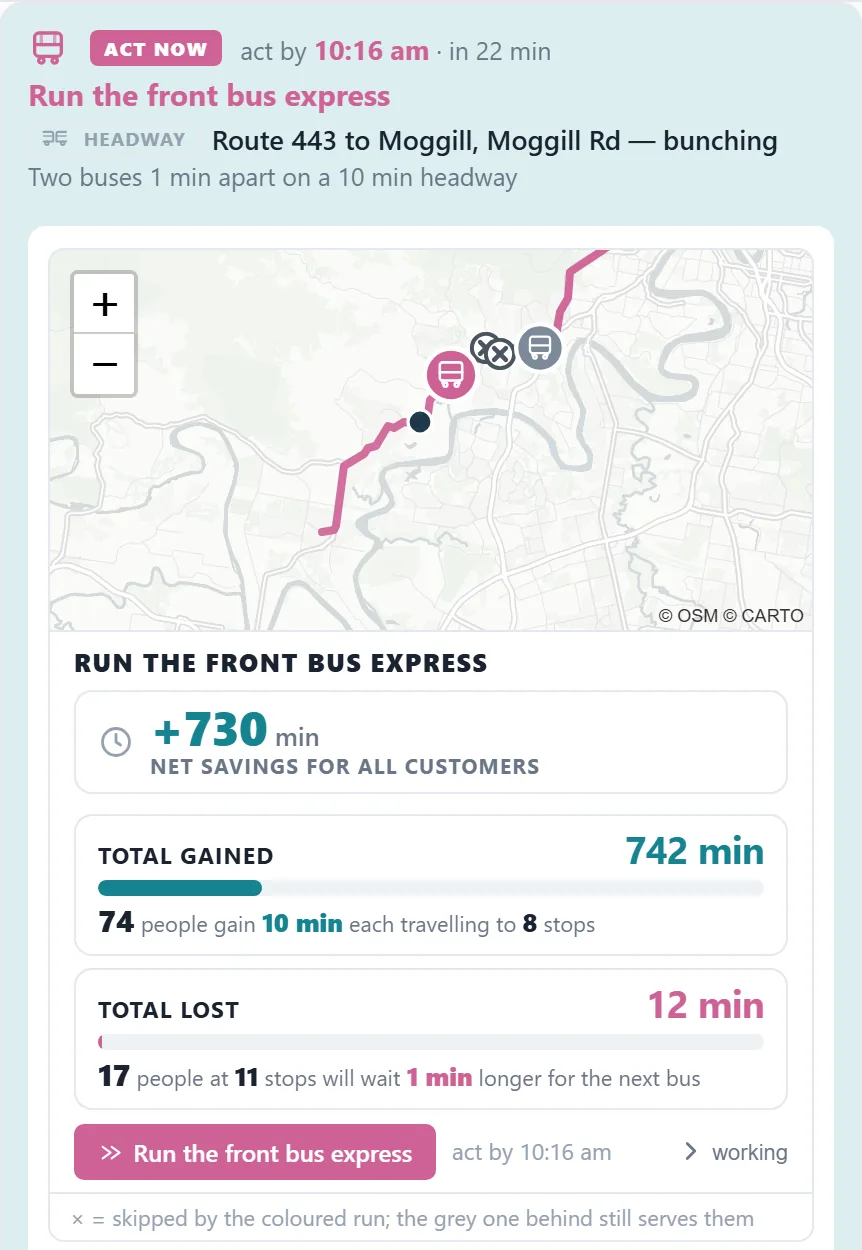
Running now
Live in Brisbane and Sydney.
Trains, metro and buses, on live network data.